Product Overview
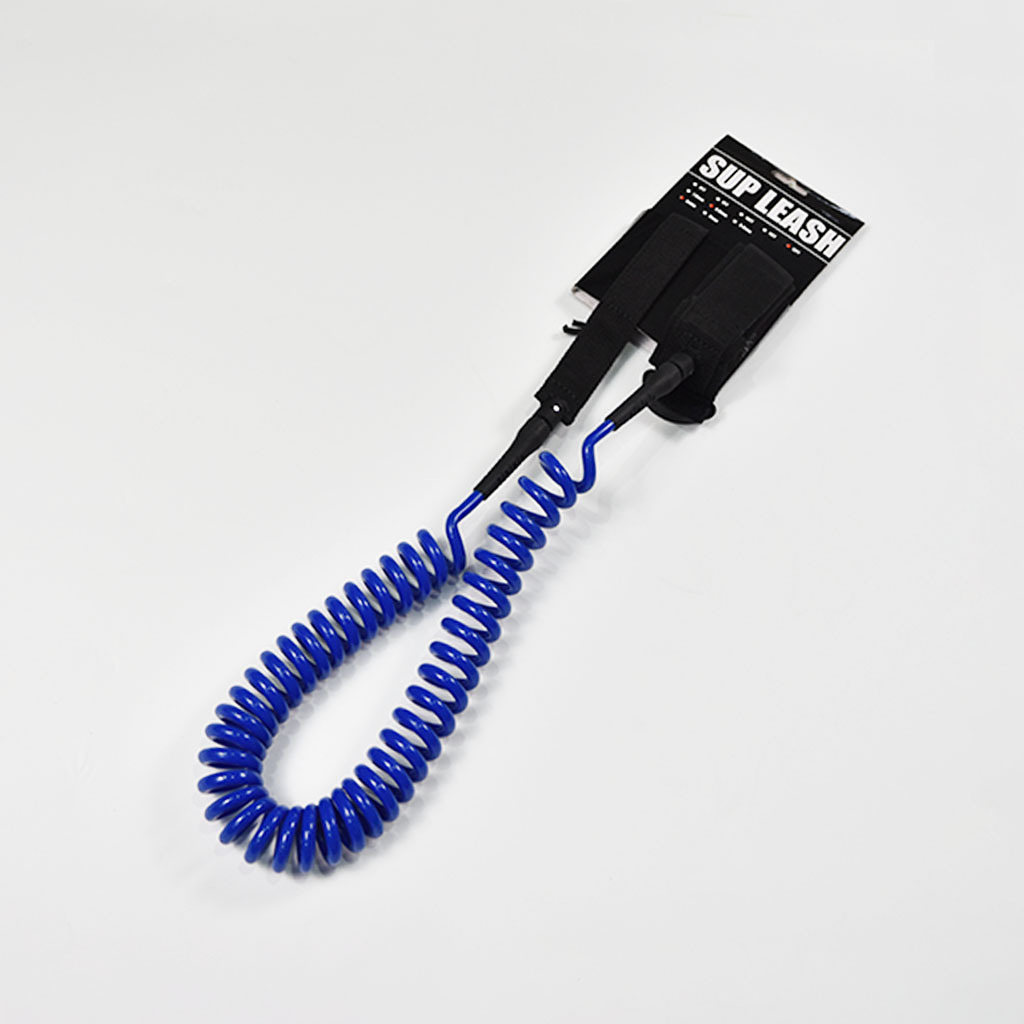
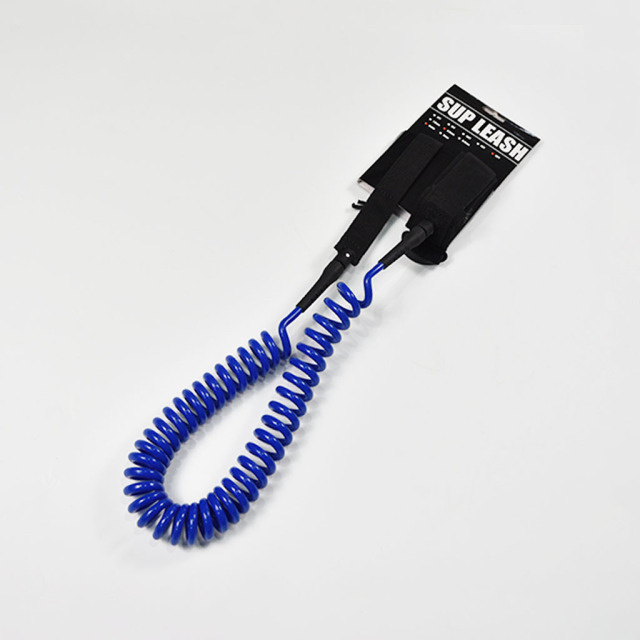
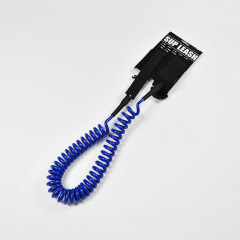
This is a SUP ankle leash for stand-up paddleboards: 12 ft of 8 mm TPU cord, a padded neoprene cuff and a rail saver that takes the wear at the board end. It is the longest ankle-cuff model in our SUP leash range, and it exists because long boards and short leashes do not get along — a leash that is too short keeps the cord under tension even when you are standing still, and a taut cord has no give left when the board pulls. Twelve feet of cord changes how the leash behaves. The 12ft SUP leash is long enough that the rail saver can sit on the tail while the cuff stays on your ankle with slack to spare, so the cord trails behind the board instead of running tight along the deck. On a long board that slack is what keeps the leash clear of your paddle stroke when you switch sides. As a custom SUP leash supplier, we build this model for shops, rental fleets and brands rather than one rider at a time.
Cord, Cuff & Hardware
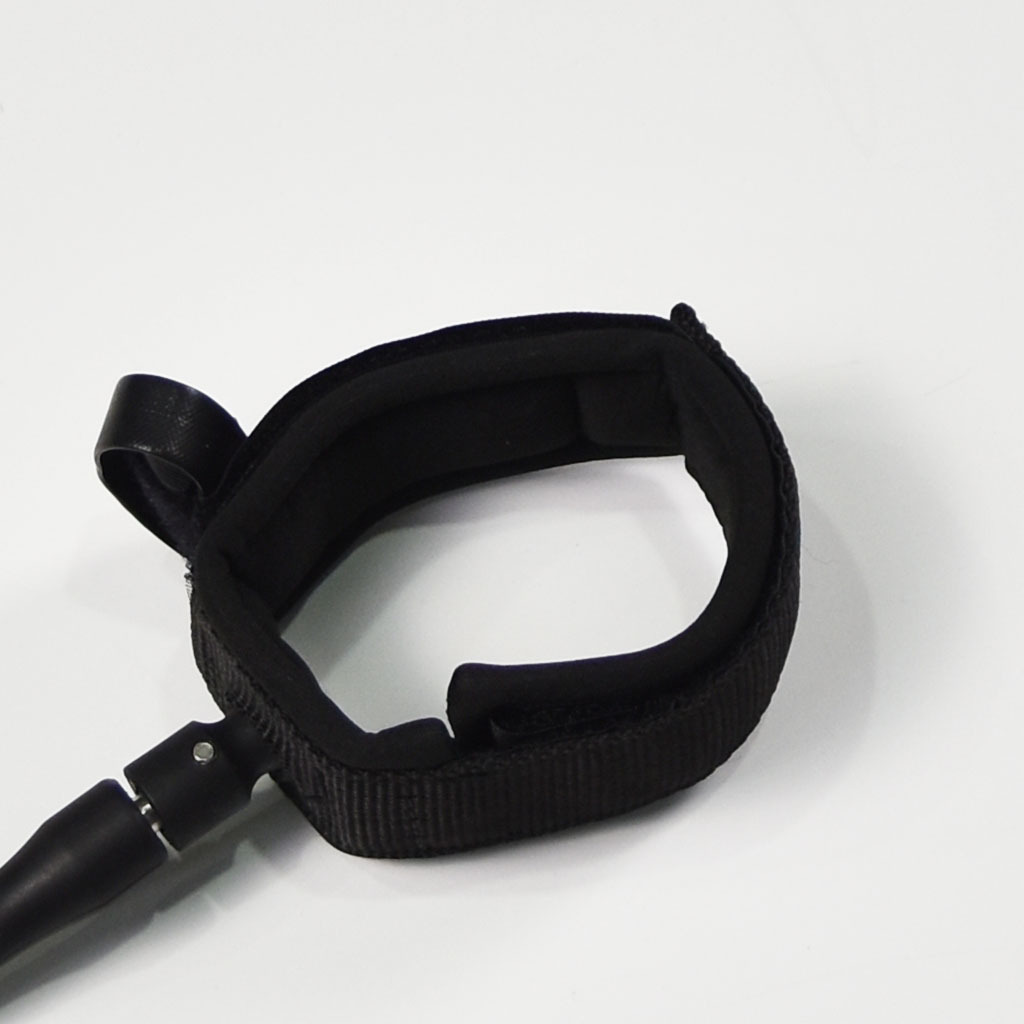
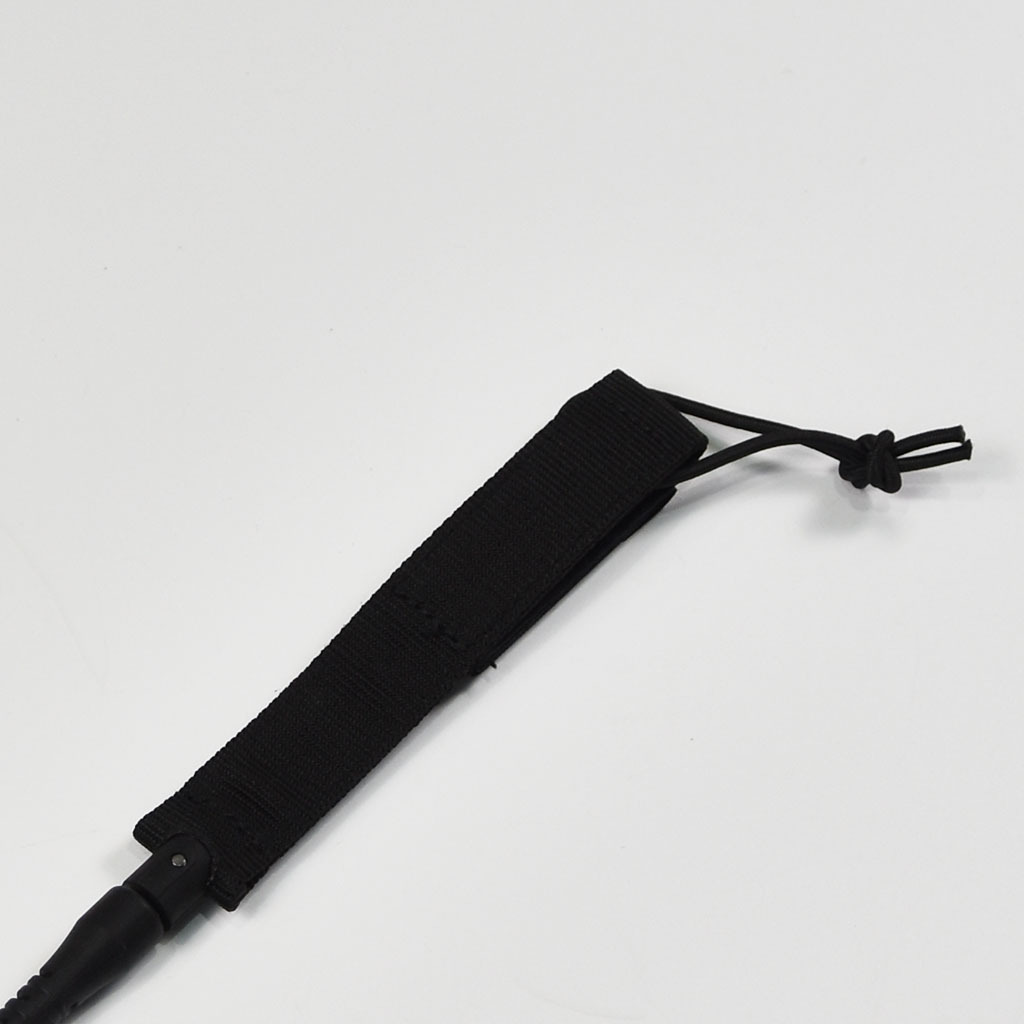
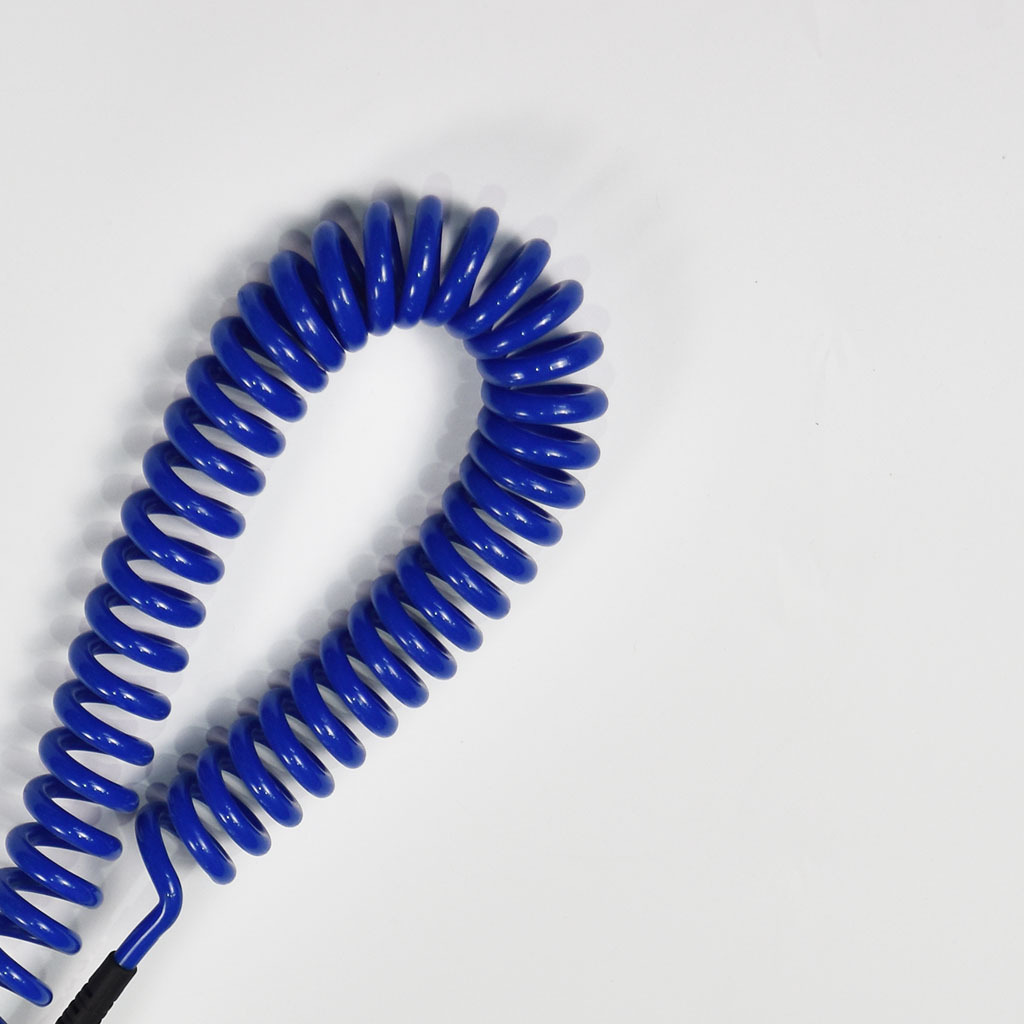
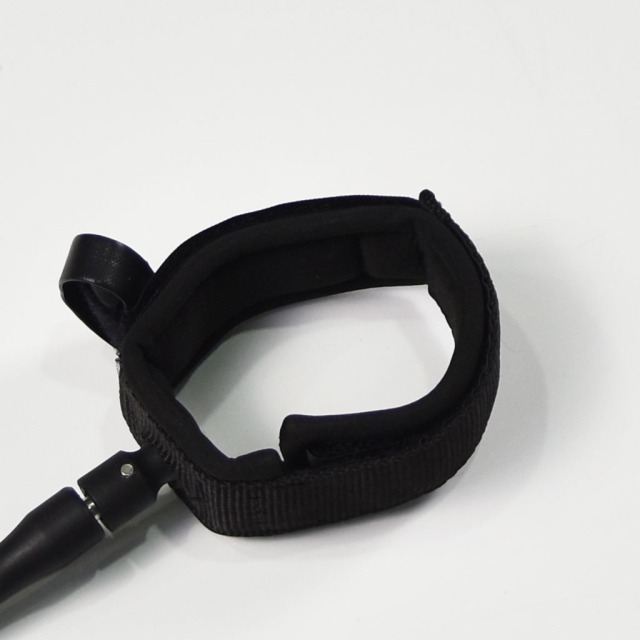
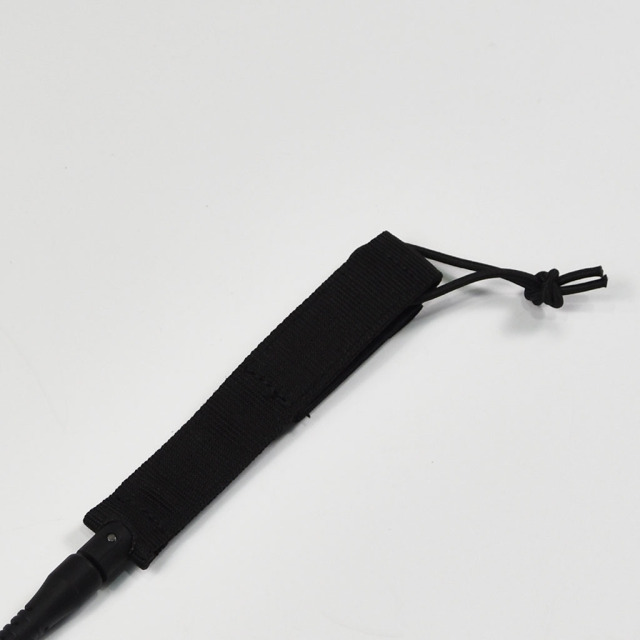
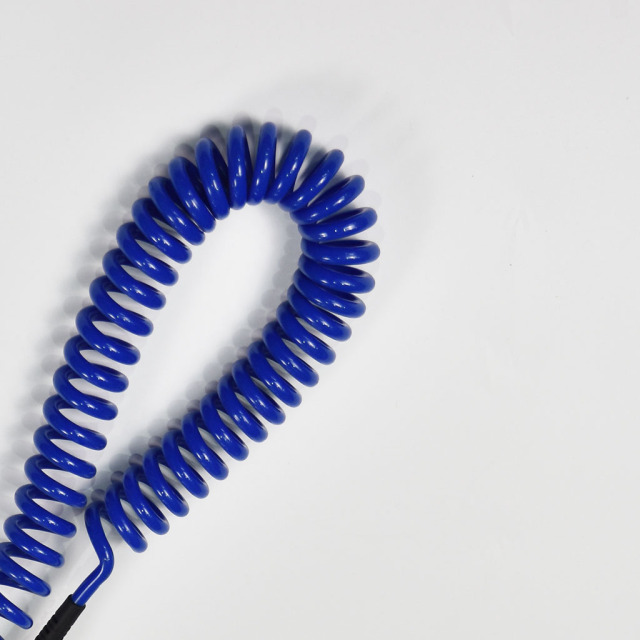
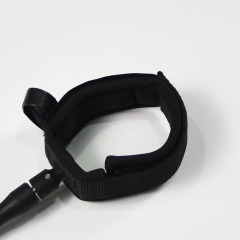
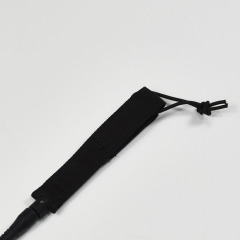
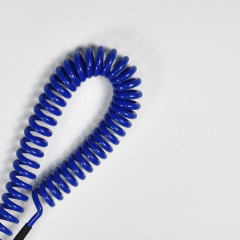
- 8 mm TPU cord. An 8 mm SUP leash carries noticeably more cord than our 7 mm models, and on a long board that extra material is what resists stretch when the board loads the leash in a gust or on a set wave. It also makes the leash feel steadier through the moment the cord goes from slack to taut. - Double-padded neoprene cuff. Padding on both sides spreads pressure around the ankle instead of cutting in at one point, and the webbing strap adjusts over bare skin, a rash guard leg or a wetsuit without rotating under load. We use 316 marine-grade stainless across the leash line. - Streamlined rail saver. The webbing rail saver is the part that touches the board, so it takes the abrasion that would otherwise chew the tail rail and the plug. Its streamlined cut sits flat rather than standing proud where it can catch. - Built as a SUP board leash. This is not a stretched surf leash. It hangs from a board you stand on and paddle, so the cord has to stay clear of the paddle shaft and the deck, and the cuff has to survive hours of flatwater rather than a two-hour surf session. - Assembled in our own workshops. Cuffs, webbing and stitching come out of our injection and sewing sections rather than an outside trim supplier. That is how a SUP leash manufacturer keeps the colour and the stitch line identical from one order to the next. - Blue cord, black cuff. Standard production runs a bright blue cord with a matte black cuff and webbing — easy to read on the deck and easy to spot in the water when a board comes loose.
Length & Board Match
- 12 ft is the long-board length. The 12ft SUP leash is the one to take when a 10 ft cord leaves the rail saver and the cuff fighting each other on a big board — typically longer touring, race and flatwater shapes.
- Smaller boards do not need it. The 8 ft and 10 ft ankle models in the same family give a tidier line on shorter boards; extra cord on a small board is just more to manage in the water.
- Cord thickness follows board size. This 8 mm sup leash is the heavier build. The 7 mm cords in the range suit smaller boards and riders who would rather carry less weight and less drag.
- Flatwater and touring. On open water the cord spends most of its time slack, so length is about clearance at the tail and at the paddle, not about holding the board back.
- Surf on a SUP. In the shorebreak more cord means more leash in the wash. If a board is being surfed rather than toured, match the length to that board instead of defaulting to the longest option.
- Matching an existing board. Measure from the leash plug to where the cuff sits on your ankle while you stand, then add the slack you want behind the tail. That figure is the length to order.
Fitting & First Session
- Thread the rail saver at the tail. Pass the webbing loop through the leash plug and pull the cord through it so the rail saver lies flat against the rail. This is the only point where a SUP board leash touches the board, so it should sit square, not twisted.
- Set the cuff above the ankle bone. Snug enough that it will not rotate under load, with the strap end tucked under its keeper so it cannot catch the cord.
- Spin both swivels by hand. They should turn freely. If a swivel feels gritty, rinse it before you paddle — grit in a swivel is what makes a leash hang twisted.
- Lay the cord out behind the board. With the SUP leash 12ft length, check that the cord falls behind the tail without a loop that could catch a fin or a paddle stroke.
- Test it in the shallows. Paddle a few strokes, step off and watch how the cord trails. If it drags across the deck, the board and the leash length are mismatched.
Specifications
| Product type | SUP ankle leash |
| Model | L00338 |
| Length | 12 ft (approx. 3.6 m) |
| Cord thickness | 8 mm |
| Cord material | TPU |
| Cuff | Padded neoprene ankle cuff with adjustable webbing strap |
| Rail saver | 38 mm streamlined webbing rail saver |
| Hardware | 316 stainless steel swivels |
| Recommended for | Long stand-up boards, touring and race shapes |
| Board attachment | Leash plug at the tail |
| Cuff attachment | Ankle |
Care, Storage & Inspection
Salt and sand do more damage to a leash than big waves do. Rinse the cord, cuff and swivels in fresh water after every saltwater session — a swivel packed with dried salt stops turning, and a swivel that stops turning is what makes a cord hang in a twist.
Dry it out of direct sun before it goes back in a bag. TPU and neoprene both age faster under UV, and a leash stored damp keeps a smell that no amount of rinsing fixes. Coil it loosely rather than tight, and hang it by the cuff — never by the cord, which stretches the very part you rely on.
Check three places before each season: the stitching where the cuff meets the webbing, the webbing at the rail saver where it rubs the rail, and the cord right next to each swivel. Fuzzing, a nick or a stiff spot in the cord is the signal to replace it rather than carry it into another season.
Do not use the leash as a carry handle, do not knot it to shorten it, and do not leave it wrapped tight around a roof rack on the drive home. Each of those loads the cord in a way it was not built for.
Ordering & Private Label
- Start with the range you intend to carry. As a SUP leash manufacturer we plan production against the mix rather than a single code: lengths, cord thicknesses, cuff styles, colours and card formats together.
- Set the branding before production. Cuff colour, cord colour and card artwork are the three things that usually change. We take the model on as a custom SUP leash supplier and keep the cord, cuff construction and hardware as specified.
- Approve a sample against your own board. Ask your sales contact about sample availability, and check the length on the boards you actually sell before committing to a run.
- Confirm the commercial details for each order. MOQ, lead time, payment terms, packing and shipping are agreed with your sales contact rather than published here, because they are set per order.
- Plan the SUP leash wholesale order around your wall. A SUP leash wholesale programme hangs better when the lengths run in sequence — 8 ft, 10 ft, 12 ft — so a customer can see the step up instead of comparing look-alike codes.
- Reorders run to the approved spec. Keep the approved sample and the artwork reference on file; repeat orders are matched to them, which is how a range stays consistent from season to season.
Accessory Range
| Leash | Regular, hypalon, non-slip, coil, SUP ankle, SUP knee and Spots models |
| Fins | Honeycomb, timber, G10 glass and nylon fins, plus fin accessories |
| Traction | Tail pads, centre pads, skimboard pads and waxless pads |
| Cover | Basic bags, regular bags, stretch covers and bodyboard bags |
| Rack | Travel racks, tie-downs, storage racks, display racks and bike racks |
| Paddles | Surf and SUP paddles |
| Foils | Surf foil, wing foil and eFoil components |
| Apparel | Rash guards, wetsuits, booties, ponchos and dry bags |
Scale & Supply Capability
CIMI is a factory-based supplier with 16 years in surf and watersports hardgoods, manufacturing at our own facility rather than sourcing through traders. Chain stores, supermarkets and surf-brand stores buy from us because one supplier covers a full accessory assortment, so a season's order and its reorders can be planned together. We take on OEM and private-label work, adapting designs, colourways and branding to your programme, and we schedule production against your agreed range plan. Send us your buy list and target dates, and we will confirm what we can make and when.
FAQ
Is a 12ft SUP leash the right length for a long board?
For long touring, race and flatwater shapes, yes — it is our longest ankle-cuff length and gives the cord enough slack to trail behind the tail instead of running tight along the deck. If you paddle a shorter all-round board, the 10 ft or 8 ft ankle models in the same family give a tidier line with less cord to manage. The check that settles it: stand on the board, measure from the leash plug to your ankle, then add the slack you want behind the tail.
What does an 8 mm SUP leash give me over a 7 mm model?
More cord. The 8 mm cord resists stretch better under a long board's pull and feels steadier when the board loads the leash, which is why we build the longest ankle lengths in 8 mm. The 7 mm cords in the range are lighter and slightly more supple, and they suit smaller boards and riders who would rather carry less weight and drag.
Will the SUP ankle leash cuff rub over a wetsuit?
The cuff is padded on both sides and the webbing strap adjusts, so pressure spreads around the ankle rather than cutting in at one point. It is built to be worn over bare skin, a rash guard leg or a wetsuit, and the strap holds its setting through a long session. If you wear a thick bootie or a drysuit cuff, check the fit with your own gear before you commit to a fleet order.
How does the leash attach to the board?
The webbing loop of the rail saver threads through the leash plug on the tail, and the cord passes through that loop. This single point is where a SUP board leash takes all its load, so the rail saver is built wide to spread the pull across the rail rather than concentrate it at the plug. Set it flat and square, then check the webbing where it rubs the rail at the start of each season.
What happens in the shorebreak with a long leash?
More cord in the wash. Twelve feet is the right amount of leash on open water, but a SUP leash 12ft long gives broken water more to push around when the board comes back at you. If the board is being surfed rather than toured, match the length to that board and keep the cord clear of your feet on the pop-up.
Can you put our shop's branding on this leash?
Yes. Cuff colour, cord colour and card artwork are the usual changes, and we take the model on as a custom SUP leash supplier without altering the cord, cuff construction or hardware that make it work. Send your artwork and colour references with the order — branding is set before production, so the run matches what you approved.
Which lengths should we stock alongside this one?
Hang them as a sequence. In a SUP leash wholesale programme, 8 ft, 10 ft and 12 ft ankle models displayed side by side let a customer see the step up to a longer board instead of choosing between codes that look identical. Take the 12 ft as your long-board anchor and fill below it according to the boards your customers actually paddle.