Twelve Feet of Reach for Full-Length Boards
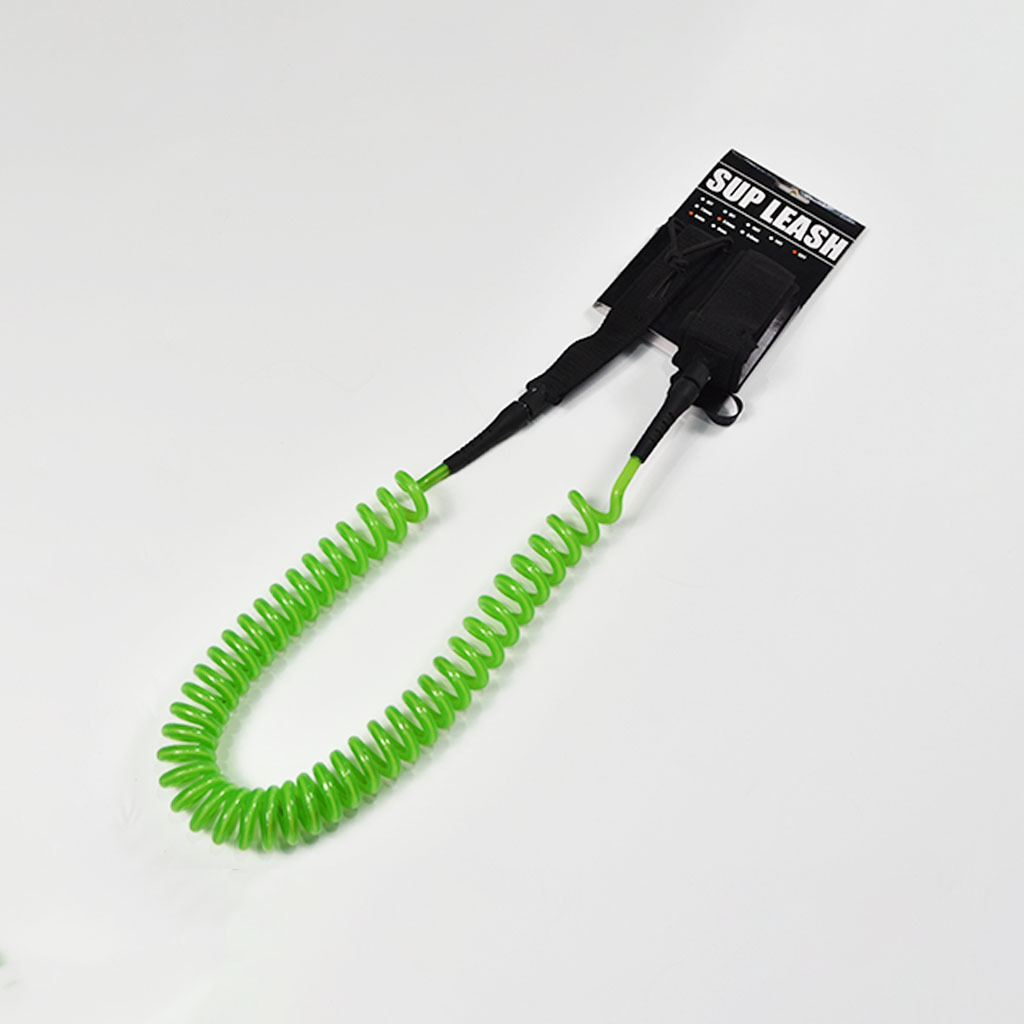
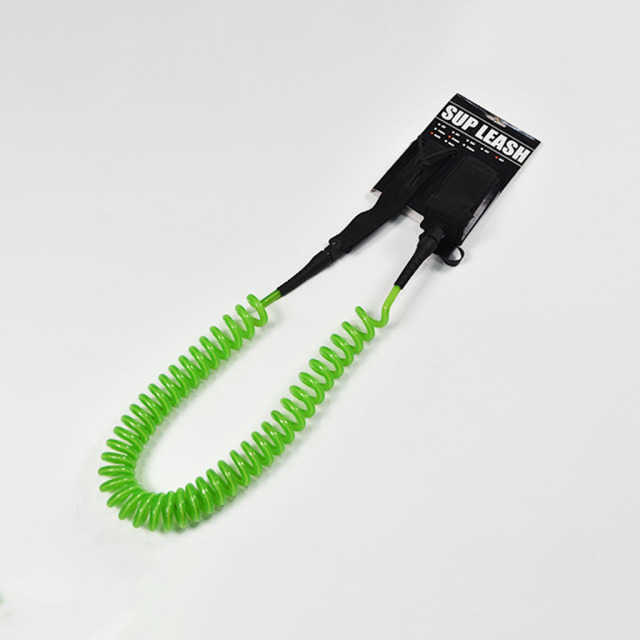
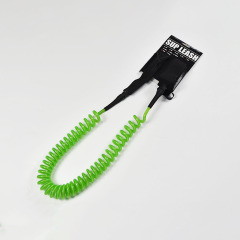
Twelve feet of tether changes what a fall feels like on a long board. With a short leash, an 11 or 12 ft deck runs out of cord within a stroke or two and the whole load arrives at your ankle at once; with this SUP ankle leash, the board keeps travelling and the pull builds over a longer stretch of water.
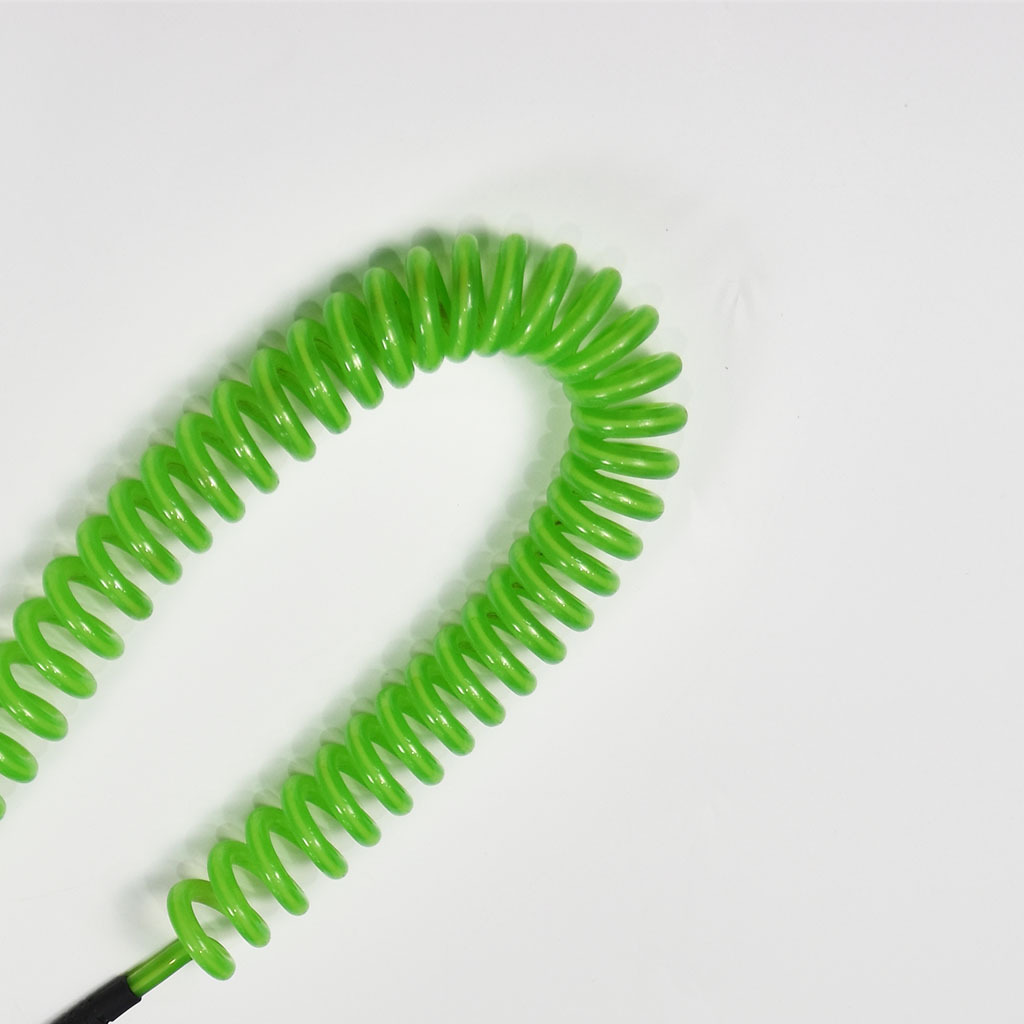
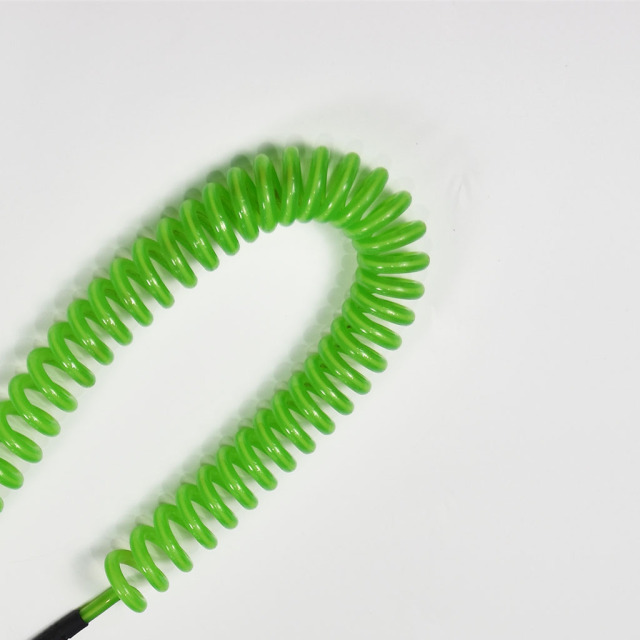
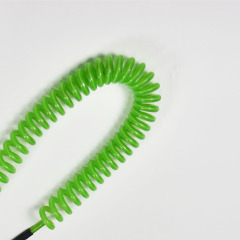
The cord is 8 mm — the heavier of the two gauges used in the SUP ankle range — and it is matched to the board rather than to the rider. A big board carries more momentum once it is free, so the thicker cord is there to hold its shape under that load and to keep the tether from curling back on itself between sessions.
Most of these leave us as wholesale SUP leash stock for shops, hire desks and brands that sell 11–12 ft boards. It uses the same cuff pattern and board-end fittings as the shorter ankle models, so a store can stock one construction from 8 ft to 12 ft and let the board on the floor decide the length.
The Parts That Wear First
- Cord ends — the joins at each swivel take the most concentrated load on the whole tether, and they are the first place a season of salt water shows up.
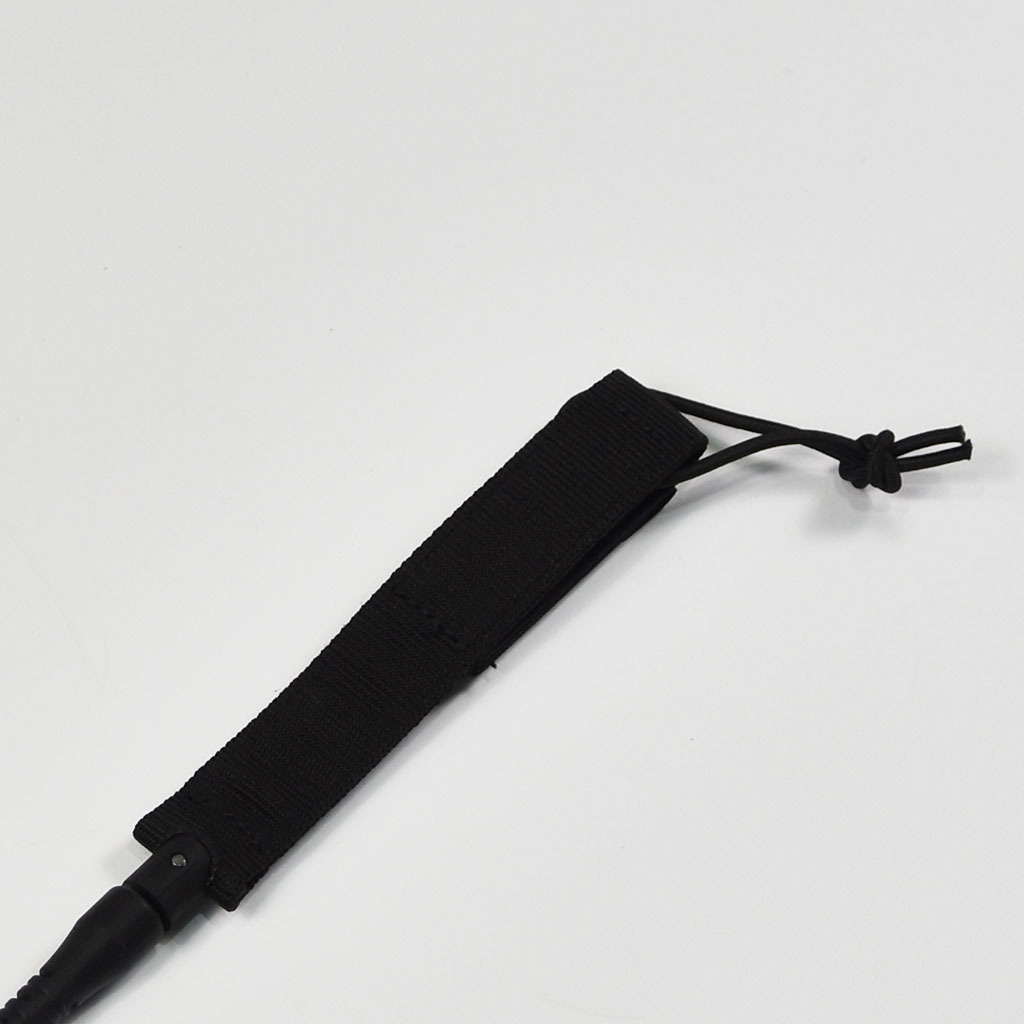
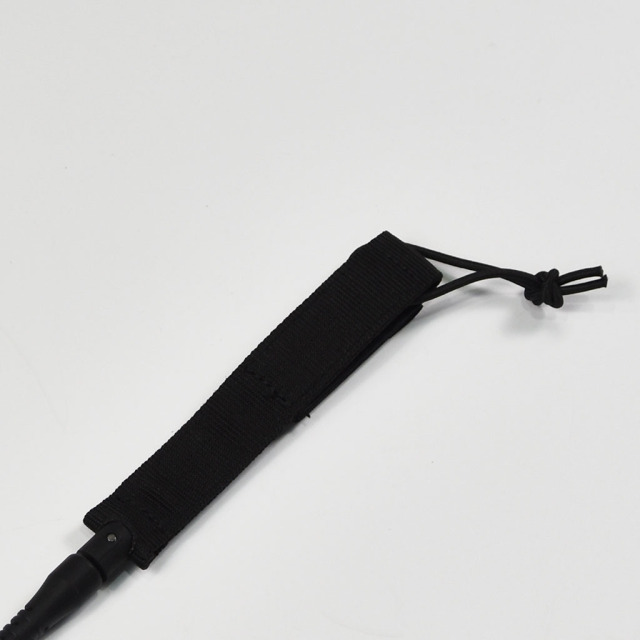
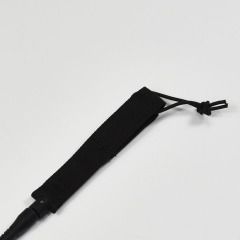
- Rail saver — a webbing section at the board end sits between cord and rail, so tail abrasion happens on webbing instead of on the cord.
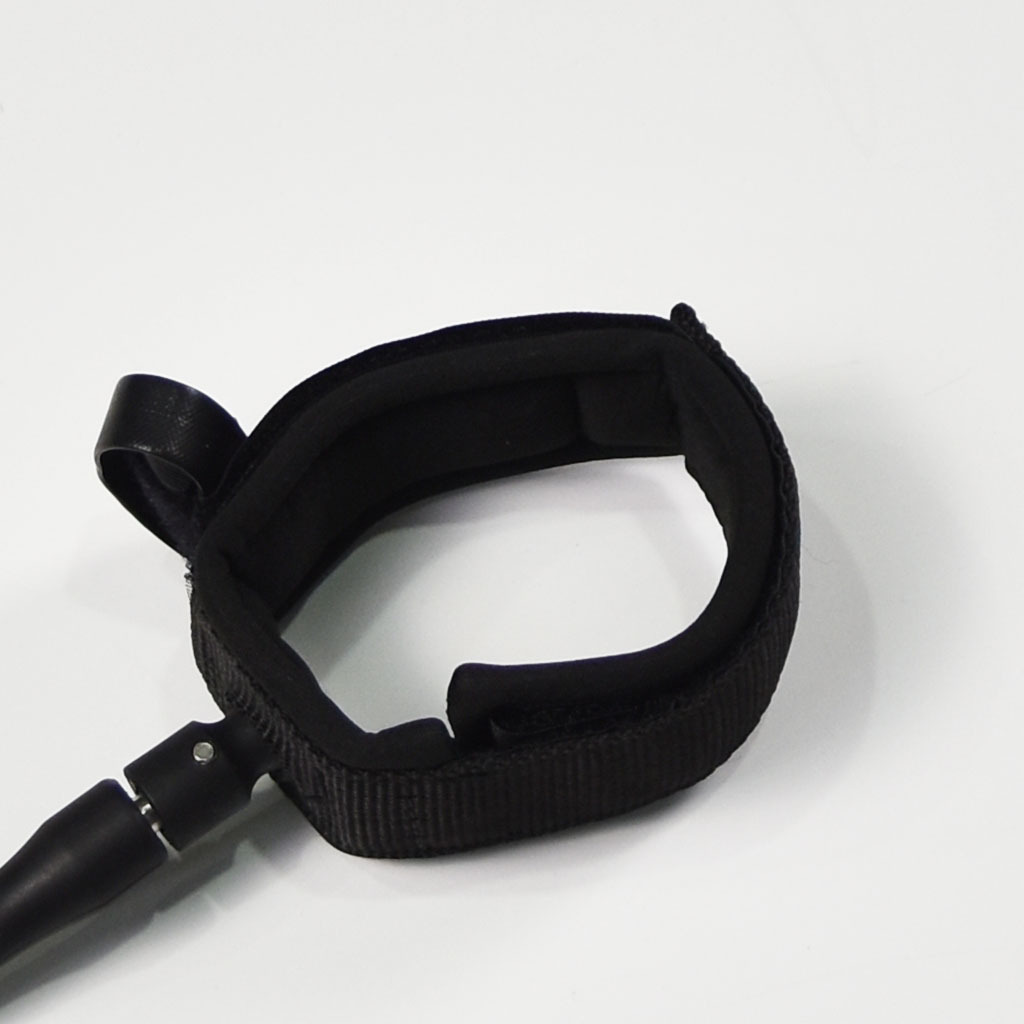
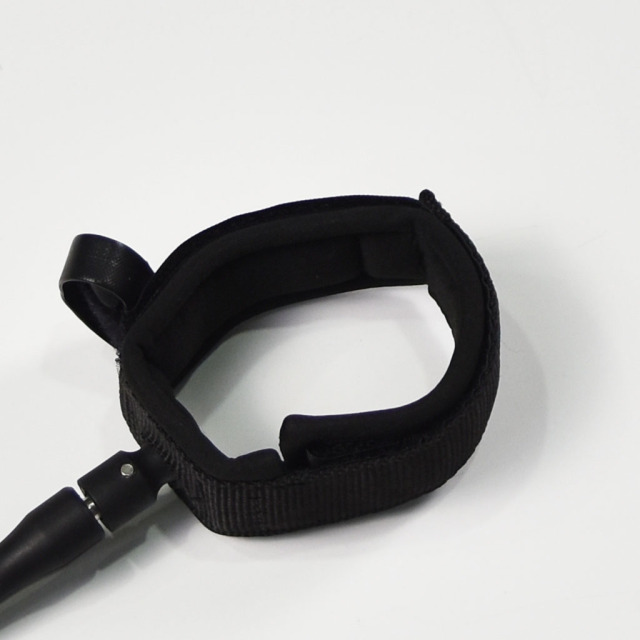
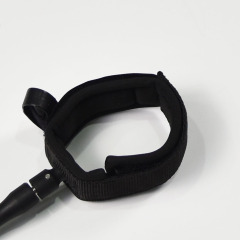
- Ankle cuff — padded, closed with a webbing strap, and cut to sit above the heel and below the wetsuit zip, where it stays clear when you drop to a knee.
- Cord — 8 mm TPU, the same cord family used across the SUP ankle range, sized for long boards rather than short surfboards.
- Made on our own line — as a SUP leash manufacturer we assemble cord, cuff and rail saver ourselves, so the build you approve is the build that repeats.
- Details open to change — cuff webbing, hardware finish and header-card artwork are the usual places to put a shop's own mark, and each is settled before a custom SUP leash goes into production. Closing the cuff. The strap should sit above the ankle bone with one finger sliding under it. Over a 3 mm boot the cuff closes on neoprene rather than on skin, so check the fit again once the boot is on — a strap that felt right on bare skin can press once there is neoprene underneath. After salt water. Rinse in fresh water, then dry out of direct sun and off a hot deck. A 12ft SUP leash stored wound tight around a board takes a set in the cord and never lies flat again, so hang it loose or coil it wide. Replace, do not repair. Run the cord through your hand before each session and look for nicks at the swivel joins, then check the webbing where it meets the rail saver and the stitching on the cuff. A cord that has gone stiff or chalky, or a nick close to a swivel, is the point to retire the leash; a home repair is not worth the risk on a board this size.
Which Ankle Length Fits Which Board
| Board length | Ankle model in the range | What the length gives you |
| Up to about 9 ft | 8 ft ankle model | a short tether that stays clear of a compact deck |
| Around 10 ft | 10 ft ankle model | a mid length for all-round and beginner boards |
| 11–12 ft | 12 ft ankle model (this product) | full reach for touring, downwind and big surf decks |
| Longer than 12 ft, or a two-person board | no standard length here | a custom SUP leash length is confirmed before an order is placed |
| Before ordering | measure tip to tail, and to the leash plug or rear D-ring rather than to the very end of the board | a plug set forward shortens the reach in practice |
On the Water and on the Shop Floor
- Flatwater touring — the tether trails well behind the tail, so switching the paddle from side to side does not catch the cord.
- Coastal downwind runs — when you come off, the board keeps moving; twelve feet of slack turns a chase into a short swim.
- Small surf on a big board — the extra length holds the board and its fins away from you while you climb back on deck.
- Hire and rental fleets — one paddle board ankle leash length covers the 11–12 ft boards, so a worn unit is swapped without changing the rest of the setup.
- Trade and wholesale bundling — the leash sits beside the touring boards it suits, so a customer buying a big board leaves with the right length rather than a guess.
- Lessons and guided groups — instructors can check every board on the beach against one familiar length before the group launches.
Model L00336 at a Glance
| Specification | Detail |
|---|
| Model reference | L00336 |
| Product type | stand-up paddle board ankle leash |
| Length | 12 ft |
| Cord thickness | 8 mm |
| Cord material | TPU, as used across the SUP ankle range |
| Cuff | padded ankle cuff with webbing strap closure |
| Board end | rail saver with webbing strap |
| Swivels | 316 stainless steel at both ends |
| Boards it suits | stand-up paddle boards around 11–12 ft |
| Other ankle lengths | 8 ft and 10 ft models in the same construction |
Scale & Supply Capability
CIMI is a factory-based supplier with 16 years in surf and watersports hardgoods, manufacturing at our own facility rather than sourcing through traders. Chain stores, supermarkets and surf-brand stores buy from us because one supplier covers a full accessory assortment, so a season's order and its reorders can be planned together. We take on OEM and private-label work, adapting designs, colourways and branding to your programme, and we schedule production against your agreed range plan. Send us your buy list and target dates, and we will confirm what we can make and when.
FAQ
How do I measure a board before ordering a 12 ft leash?
Measure from the nose to the tail, then note where the leash plug or rear D-ring sits, because that is the real anchor point. A board of 11 to 12 ft with a plug at the tail is the straightforward match; a plug set forward of the tail shortens the reach in practice, and on an inflatable the rear D-ring is the anchor rather than the very end of the board. Slightly more leash than board is fine — the cord simply lies in the water behind you.
Will the ankle cuff close over a wetsuit boot?
Yes. The webbing strap on this paddle board ankle leash has enough take-up to close over a 3 mm boot, and the cuff is padded so the strap pulls flat instead of bunching. Fasten it over the boot rather than on bare skin, then slide a finger under the strap to check it is snug without pressing on the ankle bone.
What does L00336 refer to on my order?
L00336 is the 12 ft, 8 mm ankle build — the reference your order and any reorder are matched against. As a SUP leash manufacturer we keep each reference tied to one specification, so a second delivery of L00336 should arrive with the same cord, cuff and board-end fittings as the first. Quote the reference rather than the length alone when you order.
My board is 14 ft — is there a longer leash in the range?
Not as a standard ankle length. The ankle models stop at 12 ft, which suits boards up to about 12 ft; for a 14 ft board or a two-person board, a custom SUP leash length is the route, and the length and board-end arrangement are confirmed before the order is placed. A 12 ft leash on a 14 ft board will pull tight the moment you step back to turn.
Should the leash stay on the board between sessions?
Take it off. A 12ft SUP leash left wound around a board or hanging under tension from a roof rack takes a set in the cord, and a cord with a set never lies flat again. Unclip it, rinse it, hang it loose to dry out of direct sun, and refit it at the beach — the swivels and the rail-saver webbing last longer when they are not stored under load.
Will it hold up to daily hire use?
It is built for that kind of turnover: an 8 mm cord, stitched webbing ends and stainless swivels are the parts that decide how long a hire leash lasts, and they are the parts a shop checks between sessions. Fleets running 11–12 ft boards buy it as wholesale SUP leash stock and replace on condition rather than on a calendar — a nick near a swivel or a stiff, chalky cord is the signal, not the season.